





Penis Pump Guide:
Use, Function, Purchase & Cleaning
Everything you need to make a confident, informed decision — from understanding how vacuum therapy works to choosing the right model and keeping it clean. No hype. No inflated promises. Just the facts.
View Product Details
Four sections. One complete resource.
Most guides cover one angle and leave you piecing together the rest from scattered forum posts. This one doesn't work that way. It covers all four stages you actually care about — in one place, in the right order.
What Does a Penis Pump Do — and How Does Vacuum Therapy Actually Work?

Let's start with the mechanism because most confusion about these devices comes down to a gap right here. A penis pump — the medical term is vacuum erection device (VED) — uses controlled negative pressure to draw blood into penile tissue. The cylinder sits over the penis, you pump out the air, and the resulting vacuum pulls blood into the corpora cavernosa. That creates an erection, or helps maintain one. Simple physics. No magic.
The key word there is temporary. Once you release the pressure, blood begins returning to normal circulation. That's why men who use a VED for erectile dysfunction often pair it with a constriction ring placed at the base — the ring slows that return and helps maintain the erection after the pump releases. Don't confuse the two steps; the pump creates the effect and the ring sustains it.
Who should talk to a doctor first
- Anyone with a diagnosed bleeding disorder or who takes blood thinners — vacuum pressure amplifies bruising risk significantly.
- Men with Peyronie's disease (penile curvature caused by scar tissue) — pump use without clinical guidance can worsen the condition.
- Anyone who has had recent penile surgery, including implant placement or prostatectomy within the past six weeks.
- Men with sickle cell disease or other conditions affecting blood viscosity or flow dynamics.
How to Use a Penis Pump Safely: Step-by-Step

Correct technique matters here more than it does with most consumer products. Too much pressure too quickly causes bruising, petechiae (small burst blood vessels), or numbness. Too little and you won't get the effect you're looking for. The steps below build pressure gradually and include hard stops at every point where something could go wrong. Read through them completely before you start, not while you're mid-session.
Read the full instruction manual that came with your device before you touch the pump. Each model has specific pressure limits and usage time recommendations — don't skip those. Check that the cylinder has no cracks, the gasket or seal at the base sits flat and undamaged, and the pressure release valve moves freely when you press it.
A warm shower or a warm compress applied for 2–3 minutes before use relaxes the smooth muscle in penile tissue and makes the blood-draw phase more effective. It's not mandatory but most experienced users consider it standard prep.
Apply a small amount of water-based lubricant to the opening of the cylinder — the point where it contacts the base of your body. This creates a better seal between skin and cylinder, which means more efficient pressure build-up and less air bleed. It also reduces friction and skin irritation during the session.
Use only water-based lubricant. Silicone-based products can degrade certain elastomer seals over time. Oil-based products are even more problematic — they compromise TPE and silicone gaskets and don't wash off cleanly.
Press the cylinder firmly against your body to establish the seal. Start pumping in short, measured strokes — not continuous rapid pumping. Wait a few seconds between each pump cycle and check how your body feels. Mild fullness is the target. Discomfort, pressure that feels sharp or stinging, or any numbness means you've gone too far. Release immediately.
Most manufacturers recommend building to a comfortable pressure level and holding it, rather than maximizing pressure as quickly as possible. The mechanism is drawing blood, not squeezing a bicycle tire. Treat it accordingly.
Once you reach a comfortable pressure level, hold it for the time specified in your device's instructions. Most manufacturers recommend 15–20 minutes maximum per session. Exceeding that significantly increases risk of petechiae, bruising, and — with severe overuse — minor vascular damage. The time limit isn't a suggestion.
You can release pressure, rest briefly, and re-engage if that's part of your routine — but total session time still counts toward the daily limit.
Press the quick-release valve to equalize pressure before removing the cylinder. Never pull the cylinder off while it's still under vacuum — the shear force can cause bruising at the seal point. After removal, give yourself a few minutes to rest. Check for any unusual bruising, petechiae, or discoloration. Minor temporary redness at the seal line is common; persistent bruising or spots that don't clear within a day warrant a break from use and potentially a conversation with a doctor.
Frequency and overuse — what to watch for
- Don't use daily in extended sessions when you're first starting. Begin with short sessions (10 minutes maximum) every other day and increase gradually as you learn your body's response.
- Petechiae — small red or purple dots — are broken capillaries caused by excessive pressure or duration. If you see them, stop use and let them resolve before continuing. They're a warning, not a routine side effect to normalize.
- Numbness during or after a session indicates excessive pressure or duration. This isn't normal and it isn't something to power through. Always prefer less pressure over more when in doubt.
- If bruising, persistent numbness, or pain develops, stop use and consult a doctor. Don't wait to see if it resolves on its own if symptoms are severe or persistent.
How to Choose a Penis Pump: What to Compare Before You Buy

Three main device types dominate the market: manual pumps, electric pumps, and water-based (hydro) pumps. Each makes different trade-offs on control, consistency, comfort, and price. Understanding those trade-offs before you commit saves you from buying the wrong category entirely — which is the most common mistake first-time buyers make.
- Full pressure control in your hands
- No battery, no charging, no electronics
- Typically the lowest price point
- Simpler to disassemble and clean
- Requires more technique to build pressure evenly
- Two-handed operation can be awkward initially
- Automated pressure build — no manual pumping
- Consistent, repeatable pressure levels
- Often includes a gauge for precise monitoring
- One-handed or fully hands-free operation
- Higher price than manual models
- Battery dependency adds a maintenance variable
- More components to disassemble and clean
- Water creates a more even pressure distribution
- Many users report improved comfort vs. air pumps
- Natural warm-water prep is built into the process
- Lower injury risk due to distributed pressure
- Requires shower or bath for use
- More complex cleaning after each use
- Premium pricing — typically the most expensive category
Featured Product — Electric Category

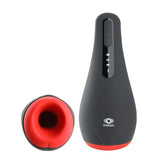
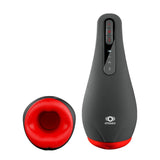
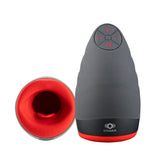
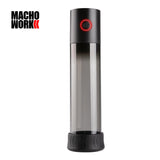
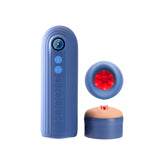
Stepless suction technology means pressure builds continuously and smoothly from zero to maximum — no fixed modes, no jumping between settings. A color-shifting LED indicator (blue → purple → red) shows exactly where you are in real time. Comes with two seal ring sizes (26mm & 32mm), disassembles in three parts for thorough cleaning, and runs on USB charge. Battery life exceeds 60 minutes per full charge.
Decision checklist — what to verify before purchasing
Don't evaluate devices by price or appearance first. Run through this checklist instead. Every item here represents a failure mode that shows up in buyer reviews post-purchase — meaning people paid for something and only discovered the problem after it arrived.
A note on price
Cheap doesn't just mean lower quality here — it can mean no safety valve, unverified materials, and no manufacturer accountability if something goes wrong. Budget devices from unverified sellers often skip the pressure gauge and use substandard gasket materials. That's not a minor inconvenience; it's a safety issue. Set a floor of at least USD 40–60 for a reputable manual device and USD 80–150 for a quality electric model. Below those thresholds, the risk profile changes materially.
OTOUCH MACHO WORK 1 — Full Spec Sheet
| Specification | Details |
|---|---|
| Product Type | Automatic Electric Penis Pump (Vacuum Erection Device) |
| Suction System | Stepless (continuous smooth adjustment, zero to maximum) |
| Pressure Indicator | LED color shift — Blue (low) → Purple (mid) → Red (maximum) |
| Seal Ring Sizes | 26mm & 32mm (both included) |
| Product Dimensions | 290 × 78 × 64 mm |
| Net Weight | Approximately 330 g |
| Gift Box Dimensions | 99 × 99 × 340 mm |
| Gross Weight (packaged) | 510 g |
| Battery Capacity | 420 mAh |
| Charging Time | Approximately 160 minutes |
| Battery Life | >60 minutes (under full charge) |
| Operating Noise | <60 dB |
| Charging Interface | USB (cable included) |
| Cylinder Material | Transparent — metric and imperial scale markings |
| Disassembly | 3-part design for full interior access and thorough cleaning |
| In the Box | MACHO WORK 1 device, USB charging cable, 2 seal rings, storage pouch, user manual |
| Warranty | 1 year |
| Shipping | 100% discreet — plain unbranded outer packaging |
| Price | USD $75.50 |
How to Clean, Dry, and Store a Penis Pump Correctly
Cleaning a penis pump after every single use isn't optional — it's the baseline. Residual moisture inside a sealed cylinder combined with organic material creates exactly the environment bacteria and mold need to grow. The cleaning process itself isn't complicated. The part most people get wrong is drying, not washing. A damp component stored in a case is worse than a wet component left open to air.
- Remove the cylinder from the pump mechanism before cleaning. Don't try to clean it assembled.
- Detach the valve, seal, and any gaskets according to your device's manual. If parts aren't removable, flag them for extra attention during rinsing.
- Set each component out separately on a clean surface. Cleaning them individually is the only way to reach every surface.
- Use mild, fragrance-free antibacterial soap and warm water — not hot. Hot water can warp certain plastics and degrade some gasket materials.
- Run water through the interior of the cylinder thoroughly. Don't just rinse the exterior.
- Gently clean seals and gaskets — don't scrub aggressively. You'll distort their profile and compromise the seal quality on future sessions.
- Rinse each part until you feel no trace of soap residue. Residual soap degrades silicone and certain plastics over time.
- Hold the cylinder vertically and let water run through the full length from both ends.
- Check the valve — soap can accumulate in the valve mechanism and affect its release speed. Flush it thoroughly.
- Pat surfaces gently with a clean, lint-free cloth. Don't use paper towels — they can leave small fibers inside the cylinder.
- Stand the cylinder upright and leave all parts to air-dry fully — at minimum 30 minutes, longer if possible.
- Don't store anything until every component is completely dry to the touch, inside and out.
Lubricant compatibility during cleaning
| ✓ Do this | ✗ Don't do this |
|---|---|
| ✓Use mild antibacterial soap and warm water as your standard cleaning method. | ✗Don't use bleach, alcohol, or harsh chemical cleaners unless the manufacturer explicitly approves them for your specific device materials. |
| ✓Use water-based lubricant exclusively during sessions — it rinses cleanly and doesn't leave residue that bonds to silicone. | ✗Don't use silicone-based lubricant — it bonds to silicone seals and gaskets in a way that accelerates degradation and doesn't wash off completely. |
| ✓Dry every component individually before reassembly or storage. | ✗Don't store any component — even "mostly dry" — in an enclosed case or bag. Trapped moisture is where hygiene problems start. |
| ✓Inspect seals and gaskets during every cleaning session for signs of wear, cracking, or deformation. | ✗Don't use oil-based products during sessions. Oil permeates elastomer materials and can't be fully removed, which compounds into a hygiene risk over time. |
Storage guidelines
Once everything is clean and completely dry, store the device in a breathable fabric pouch or the original manufacturer's case — whichever allows some airflow. Sealed plastic bags trap residual humidity. Keep the device away from direct sunlight; UV exposure degrades elastomers, plastics, and silicone over time. Inspect the device before each session for any wear on seals, tubing, or the valve mechanism. A seal that's starting to degrade won't hold pressure correctly and can give way unexpectedly during use. Replace worn parts as soon as you notice them.
Store lubricant and any accessories separately from the device itself, particularly oil-based products — even proximity contact over time can transfer to gasket surfaces. Keep your cleaning kit organized and accessible so the post-use routine doesn't become a reason to skip it.
Frequently Asked Questions
What does a penis pump actually do?
It creates a temporary vacuum around the penis that draws blood into the erectile tissue — the same tissue that fills during a natural erection. The result is engorgement that can help achieve or maintain an erection for a limited window of time. That's the full mechanism. It doesn't permanently change size, it doesn't treat the underlying cause of erectile dysfunction, and it doesn't work without the blood-draw physics of the vacuum seal.
How long should a session last?
Follow your device's specific instructions — they exist because the manufacturer tested the device's pressure range against safety thresholds. As a general benchmark, most clinical and manufacturer guidelines cap sessions at 15–20 minutes. First-time users should stay well under that; 10 minutes at comfortable pressure is a reasonable starting point. If you feel pain, numbness, or see petechiae (small red or purple spots), stop immediately regardless of how long you've been in the session. Those signals override the time limit.
Can I clean it with regular soap?
Usually yes — mild, fragrance-free antibacterial soap with warm water is the standard cleaning method for most devices. The caveats: don't use hot water (it can warp polycarbonate and degrade silicone), don't use harsh cleaners like bleach unless the manufacturer specifically approves them for your device's materials, and rinse thoroughly so no soap residue remains inside the cylinder or valve. If your device includes a silicone sleeve or gasket, check that the soap is silicone-safe — most mild soaps are.
Is a penis pump a permanent solution for erectile dysfunction?
No. The effect is temporary in every case. The engorgement from vacuum pressure resolves once pressure releases and blood returns to normal circulation. A VED can help you achieve an erection for a specific session — with a constriction ring, that might last 20–30 minutes — but it doesn't address the vascular, neurological, or hormonal factors that cause erectile dysfunction. If you're dealing with ED, a VED works best as a tool within a broader management plan developed with a doctor, not as a standalone fix.
What's the difference between a manual pump and an electric model?
Manual pumps build pressure through a hand-squeeze or hand-pump mechanism — you control the rate directly. That gives you precise tactile feedback but requires more technique, especially when you're starting out. Electric models automate the pressure build with a motor so you get consistent, repeatable levels without manual effort. They're easier to use correctly and more consistent across sessions but cost more and add cleaning complexity. The right choice comes down to whether you prioritize simplicity and control (manual) or consistency and ease of use (electric).
What lubricant should I use with a penis pump?
Water-based lubricant only. It creates an effective seal at the cylinder base, rinses off cleanly, and doesn't interact chemically with the materials in seals, gaskets, or cylinder walls. Silicone-based lubricant degrades silicone seals over time. Oil-based lubricants permeate elastomer materials and don't fully wash out, which creates a compounding hygiene problem with each session.
How do I know if I'm using too much pressure?
Your body tells you clearly. Pain, burning, or stinging during pressure build means too much, too fast. Numbness in the tip of the penis is a sign you've restricted blood flow more than intended — release immediately. Petechiae (small red or purple dots on the skin) after a session mean capillaries have burst from excessive pressure or duration. Minor temporary redness at the seal line is normal and expected; the symptoms above are not. If your device includes a pressure gauge, use it. If it doesn't, that's a reasonable argument for upgrading to a model that does.
Compare models or read the purchase guide
You've got the full picture now — how it works, how to use it, what to buy, and how to keep it clean. The next step is finding the right model for your needs and budget.


