A dead battery mid-session is the fastest way to kill the mood. Most rechargeable sex toy battery life problems are avoidable. A few simple habits — charge to 80%, unp...
View More


Fact-checked for accuracy · Updated 2026 · 8 min read
Walk through the material specs on any personal wellness product, and you'll run into two words constantly: silicone and TPE. They look similar in photos. They feel similar under a thumb in a store display. But at a chemical level, they're not the same material at all, and that difference matters a lot more than most product descriptions let on.
Here's a straight breakdown of what medical-grade silicone and TPE actually are, how they compare on safety, and why you'll often find both materials used together in the same device — on purpose.
If you remember nothing else from this article, remember this word: porous.
A porous material has microscopic openings in its surface — too small to see, but large enough for moisture, bacteria, and residue to work their way in. A non-porous material doesn't have those openings. That single structural difference determines almost everything else: how easy a material is to clean, how long it lasts, and how it should be cared for.
Medical-grade silicone is a purified silicone polymer, tested for biocompatibility, meaning it's designed specifically not to react with human tissue. It's the same category of material used in surgical implants and medical tubing, which is exactly why the sexual wellness industry adopted the term. A few defining traits:
The catch: not everything labeled "silicone" is pure. Cheaper products sometimes use silicone blends, mixed with fillers or lower-grade materials to cut cost. A genuine medical-grade product should be labeled clearly, and it shouldn't carry a strong chemical smell out of the box.
TPE stands for thermoplastic elastomer, a soft, rubber-like blend of plastic and rubber polymers. It's the material behind most of the ultra-realistic, skin-like textures you see in masturbator sleeves, and there's a simple reason for that: TPE mimics soft tissue better than almost anything else on the market. It stretches, it has give, and it's significantly cheaper to mold into detailed textures than silicone.
The tradeoff is exactly what you'd expect from a porous material:
None of this makes TPE inherently unsafe. It means TPE asks more of you as the user. If you're not going to commit to rinsing, drying, and replacing it on schedule, that's when the porosity actually becomes a hygiene problem.
| Property | Medical-Grade Silicone | TPE |
|---|---|---|
| Porosity | Non-porous | Slightly porous |
| Cleaning | Easy, thorough with soap and water | Requires diligent rinsing and full drying |
| Lifespan | Years, with proper care | Shorter; replace periodically |
| Feel | Smooth, consistent | Highly realistic, skin-like |
| Lubricant compatibility | Water-based recommended | Water-based only |
Once you understand the tradeoffs, it makes sense why a lot of well-designed devices don't choose one material exclusively. A common approach: a medical-grade silicone exterior for the parts you're gripping and handling, paired with a removable TPE inner sleeve for the parts designed around realistic texture.
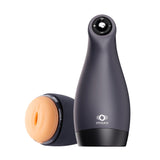
This is exactly the logic behind removable-sleeve designs like INSCUP 4's removable TPE sleeve. Because the sleeve detaches, you can rinse and fully dry it after every use instead of guessing whether moisture is trapped somewhere you can't reach, which is precisely the maintenance TPE requires to stay hygienic.
If your device uses a TPE component, the routine that actually matters is simple, and skipping it is where problems start:
A dedicated drying tool removes most of the guesswork here. Our internal chamber dryer is built specifically to eliminate trapped moisture in sleeve-based devices, which is the single biggest factor in TPE hygiene.

Internal Chamber Dryer
Rapid-drying technology designed to eliminate trapped moisture — the main hygiene risk in any TPE or silicone sleeve.
View the Dryer →Is TPE unsafe to use?
Not inherently. TPE is widely used in personal wellness products because of its realistic feel. It simply requires more consistent cleaning and periodic replacement than silicone because of its porous structure.
How do I know if a product is really medical-grade silicone?
Genuine medical-grade silicone is odorless, doesn't feel sticky or tacky, and is explicitly labeled as such by the manufacturer, ideally alongside certifications like CE or FCC.
Can I use any lubricant with these materials?
Water-based lubricant is the safest choice for both silicone and TPE. Silicone-based lubricant can degrade TPE over time and, depending on the silicone formulation, may also affect certain silicone products.
Which material should I prioritize when choosing a product?
For parts in direct, prolonged contact with your body, medical-grade silicone offers the strongest hygiene profile. TPE is a reasonable choice when realistic texture matters most, as long as you're consistent about cleaning, drying, and replacement.
Neither material is universally "better" — they're built for different jobs. Medical-grade silicone wins on pure hygiene and longevity. TPE wins on realistic feel, at the cost of needing more attentive care. The safest approach isn't picking a side; it's understanding which material you're using and giving it the maintenance it actually requires.
Explore devices built with certified, body-safe materials in our full collection, or check our cleaning and maintenance guide for material-specific care instructions.
This article is for general educational purposes and reflects widely cited industry and consumer-safety guidance on personal care product materials. It is not a substitute for professional medical advice.

L'OTOUCH AIRTURN 2 est méticuleusement conçu pour offrir une expérience flu...
Boutique
YU BattleHelm — Kit plaisir tout-en-un avec télécommande au bout des doigts, extenseur vibra...
Boutique
SUBMARINE – Masturbateur masculin étanche IPX7 avec poussée automatique, vibrations et contr...
Boutique
Le AIRTURN 4 est un masturbateur à aspiration vibrante avancé, conçu pour offrir une stimula...
Boutique
CHIVEN 2 – Masturbateur buccal masculin chauffant pour un plaisir solitaire personnalisable ...
Boutique
L'INSCUP 4 est un masturbateur masculin de nouvelle génération conçu pour offrir une stimula...
Boutique
Découvrez une expérience unique et satisfaisante avec l'OTOUCH MACHO WORK 2, un masseur de...
Boutique
NINJA 2 – Masturbateur masculin gonflable avec ajustement de la fermeté et 7 modes de vibrat...
Boutique| Produit | SKU | Description | Collection | Disponibilité | Type de produit | Autres détails |
|---|