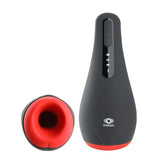
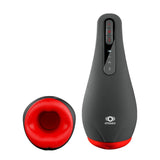
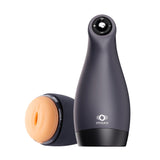
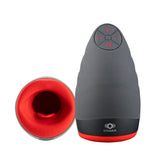
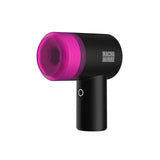
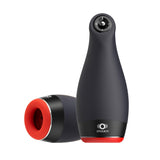
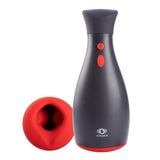
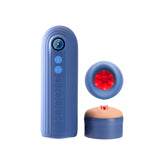
A dead battery mid-session is the fastest way to kill the mood. Most rechargeable sex toy battery life problems are avoidable. A few simple habits — charge to 80%, unp...
View More


78%
of people across 18 countries reported masturbating, according to a large-scale international sexual health survey covering 57% of the world's population.
And yet, ask most men whether they'd bring it up casually, and the answer is almost always no. That gap — between how common something is and how uncomfortable it still feels to talk about — is where most of the myths on this list actually come from.
None of these myths are new. Some trace back over a century to physicians who genuinely believed self-stimulation caused everything from blindness to psychosis. Modern research has had decades to test these claims. Here's what it actually found.
✕ Myth
It's not normal, or it's a sign something's wrong with your sex life.
✓ Fact
It's one of the most common human sexual behaviors, across every age group and relationship status. Research consistently shows it can coexist with — not replace — a satisfying relationship with a partner.
✕ Myth
It lowers fertility or sperm count.
✓ Fact
The body continuously replenishes sperm. There's no research evidence linking masturbation to reduced fertility or sperm count in men.
✕ Myth
It causes long-term sexual dysfunction.
✓ Fact
Some research suggests regular masturbation may support prostate health. What matters more than frequency is whether technique or expectations create friction with partnered sex — a solvable issue, not a permanent one.
✕ Myth
It harms your mental health.
✓ Fact
Medical research indicates moderate masturbation typically doesn't negatively affect mental health, and it's often associated with stress relief and mood improvement.
✕ Myth
Using a product for it means something's missing in your sex life.
✓ Fact
Enhanced stimulation is linked to improved sexual function overall. A 2024 study found that regular vibrator use over three months improved sexual and pelvic floor function in study participants — the opposite of "replacing" a healthy sex life.
A lot of this stigma isn't ancient. In the late 1800s, physicians like Dr. John Harvey Kellogg genuinely believed masturbation caused serious physical and psychological illness — ideas with zero scientific basis that nonetheless shaped public attitudes for generations. Modern research has had well over a century to test those claims properly, and it consistently hasn't found evidence to support them.
What actually seems to matter is intent and context, not the act itself. If it's something you want to be doing, and it's not creating distress or conflict in your life, the research is remarkably consistent: there's nothing here to worry about.

Exploring Solo Wellness with the Right Tools
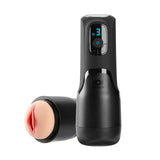
If you're curious about incorporating a product, starting with something straightforward — adjustable intensity, easy cleanup, no learning curve — makes the experience less about performance and more about understanding what actually works for you.
View AIRTURN 2 →For a broader look at how solo exploration fits into overall sexual confidence, see our piece on men, sex toys, and the pressure to perform.
None of this means frequency or context never matter. A small number of situations are worth genuinely paying attention to:
These are signs worth discussing with a doctor or therapist — not because the act itself is the problem, but because any behavior tied to distress deserves a real conversation, not more guessing.
Instead of a summary, here's a short list. If most of these are true for you, the research says you're squarely in normal, healthy territory:
It's something you choose to do, not something driven by guilt or compulsion
It doesn't interfere with your work, sleep, or relationships
It coexists with, rather than replaces, the intimacy you want with a partner (if you have one)
You're not relying on outdated myths to judge yourself for it
You feel comfortable enough with the topic to ask a real question if one comes up
New to solo wellness? Start here · Browse the full collection
Sources: International Society for Sexual Medicine (ISSM); peer-reviewed research summarized by Medical News Today; large-scale international sexual health survey data (Kaestle et al.). This article is for general educational purposes and is not a substitute for professional medical advice. If masturbation feels distressing or compulsive for you, a doctor or therapist can help.

L'OTOUCH AIRTURN 2 est méticuleusement conçu pour offrir une expérience flu...
Boutique
YU BattleHelm — Kit plaisir tout-en-un avec télécommande au bout des doigts, extenseur vibra...
Boutique
SUBMARINE – Masturbateur masculin étanche IPX7 avec poussée automatique, vibrations et contr...
Boutique
Le AIRTURN 4 est un masturbateur à aspiration vibrante avancé, conçu pour offrir une stimula...
Boutique
CHIVEN 2 – Masturbateur buccal masculin chauffant pour un plaisir solitaire personnalisable ...
Boutique
L'INSCUP 4 est un masturbateur masculin de nouvelle génération conçu pour offrir une stimula...
Boutique
Découvrez une expérience unique et satisfaisante avec l'OTOUCH MACHO WORK 2, un masseur de...
Boutique
NINJA 2 – Masturbateur masculin gonflable avec ajustement de la fermeté et 7 modes de vibrat...
Boutique| Produit | SKU | Description | Collection | Disponibilité | Type de produit | Autres détails |
|---|