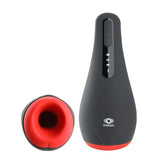
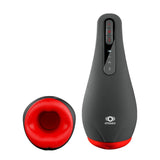
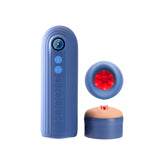
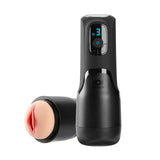
A dead battery mid-session is the fastest way to kill the mood. Most rechargeable sex toy battery life problems are avoidable. A few simple habits — charge to 80%, unp...
View More


A comprehensive, data-driven review of friends with benefits relationship research — prevalence, outcomes, gender differences, and the psychology behind casual sex among friends.
The term "friends with benefits" (FWB) entered mainstream vocabulary in the early 2000s, popularized by films and television shows. But the phenomenon itself is far from new — and the scientific definition is more nuanced than the pop culture portrayal suggests.
In research literature, a friends with benefits relationship is typically defined as a friendship in which the two individuals engage in sexual activity without the explicit expectation of a romantic commitment or relationship. Key definitional criteria include:
This definition overlaps with several related constructs:
| Term | Definition | Key Distinction from FWB |
|---|---|---|
| Friends with Benefits | Ongoing friendship + repeated sexual contact, no romantic commitment | — (reference category) |
| Booty Call | Primarily sexual contact with a friend, often initiated on demand | Less emphasis on friendship quality; more utilitarian |
| Hookup | Sexual encounter with someone not in a romantic relationship | May be with strangers, acquaintances, or friends; single encounter |
| Casual Sex | Sexual activity outside a committed relationship | Broader category; includes FWBs but also one-night stands, sex with acquaintances, etc. |
| Situational Friendship | Relationship that is primarily sexual but includes some friendly interaction | Sexual component is primary; friendship is secondary |
| Committed Relationship | Ongoing romantic and sexual partnership | Includes expectation of exclusivity and romantic commitment |
Modern research increasingly recognizes that non-romantic sexual relationships exist on a spectrum rather than in discrete categories. Hughes et al. (2005) identified five distinct types:
FWB relationships are most prevalent among emerging adults (ages 18–25), who are in a developmental stage characterized by identity exploration, shifting social networks, and delayed commitment to long-term partnerships.
| Study | Population | Sample Size | Lifetime FWB Prevalence |
|---|---|---|---|
| Bisson & Levine (2009) | Undergraduate students, US | N = 1,744 | 54% |
| Owen & Fincham (2011) | Undergraduate students, US | N = 556 | 60% |
| Puentes et al. (2008) | Undergraduate students, US | N = 874 | 49% |
| Vrangalova & Ong (2014) | Community adults, US | N = 233 | 38% |
| Lehmiller et al. (2015) | Community adults, US | N = 390 | 42% |
| Garcia et al. (2012) | Cross-national meta-analysis | N = 33,091 | 48–61% (varies by culture) |
While most research has focused on college students, FWB relationships are not exclusively a young adult phenomenon:
A 2020 study by Swan et al. found that adults over 50 increasingly engage in FWB-type relationships, driven by changing social norms, longer lifespans, and a desire for intimacy without the obligations (financial, caregiving, family-entanglement) that can accompany later-life romantic partnerships.
Research suggests that FWB relationships are more common among sexual minority populations:
The higher prevalence among gay men may reflect both cultural norms within gay communities and the relative scarcity of committed-partner options in some contexts.
Understanding why people choose FWB relationships requires looking beyond the obvious (sexual gratification) to a more complex set of psychological motivations.
| Motivation | % Endorsing | Gender Difference |
|---|---|---|
| Sexual gratification / desire | 85–92% | Men slightly higher (d = 0.22) |
| Desire for intimacy without commitment | 62–70% | Women slightly higher (d = 0.18) |
| Convenience / ready sexual access | 55–65% | No significant difference |
| Emotional connection without labels | 48–58% | Women significantly higher (d = 0.45) |
| Exploration and novelty | 35–45% | No significant difference |
| Avoiding relationship distress | 25–35% | Women slightly higher |
| Power / autonomy | 15–25% | Men slightly higher |
| Revenge / jealousy induction | 8–12% | No significant difference |
Data compiled from multiple studies: Bisson & Levine (2009), Owen & Fincham (2011), Vrangalova & Ong (2014), Lehmiller et al. (2015).
Attachment theory provides a powerful lens for understanding who enters FWB relationships and why:
Sociosexuality — an individual's willingness to engage in sexual activity outside of a committed relationship — is one of the strongest predictors of FWB participation. People with unrestricted sociosexuality (willing to have sex without emotional commitment) are significantly more likely to enter FWB relationships and report higher satisfaction with them (Simpson & Gangestad, 1991; Penke & Asendorpf, 2008).
This trait has both genetic (heritability approximately 0.40) and environmental components, and it predicts a range of sexual behaviors including number of sexual partners, attitudes toward infidelity, and preference for uncommitted sexual relationships.
The most important question about FWB relationships is: do they work? The answer, as with most things in psychology, is: it depends.
A landmark longitudinal study by Lehmiller et al. (2015) followed 390 adults with FWB relationships over a 3-month period and found the following outcomes:
| Outcome | Percentage |
|---|---|
| Relationship ended, friendship maintained | 28% |
| Relationship ended, friendship ended | 22% |
| Relationship continued as FWB | 25% |
| Transitioned to committed romantic relationship | 18% |
| Transitioned to non-sexual friendship | 7% |
The relationship between FWB participation and psychological well-being is complex and moderated by several factors:
One of the most robust findings in FWB research is what researchers call the "benefits paradox":
The very features that make FWB relationships attractive (low commitment, sexual access, friendship foundation) are the same features that make them vulnerable to dissolution. The low-commitment nature means either party can exit at any time without "breaking up." The friendship foundation means there is emotional investment that can be damaged. And the sexual component introduces attachment and jealousy dynamics that complicate the friendship.
Popular culture portrays men as enthusiastic FWB participants and women as reluctant ones who inevitably develop feelings. The research tells a more nuanced story.
| Dimension | Men | Women | Effect Size (d) |
|---|---|---|---|
| Endorsement of casual sex attitudes | Higher | Lower | 0.45 (moderate) |
| Preference for FWB over committed relationship | Higher | Lower | 0.38 (small-moderate) |
| Sexual regret in FWB context | 23% | 37% | 0.32 (small-moderate) |
| Emotional attachment development | Lower | Higher | 0.42 (moderate) |
| FWB relationship satisfaction | Higher | Lower | 0.28 (small) |
| Likelihood of seeking romantic transition | Lower | Higher | 0.51 (moderate) |
Evolutionary psychology explains the gender differences that do exist as products of different parental investment pressures. Because women invest more in reproduction (pregnancy, lactation, extended childcare), casual sex carries higher potential costs. This explains why women, on average, are more selective about casual sex partners and more likely to develop emotional attachment in FWB contexts (Buss & Schmitt, 1993; Trivers, 1972).
However, this perspective must be complemented by sociocultural factors: the sexual revolution, access to contraception, and changing gender roles have substantially reduced the gender gap in casual sex attitudes and behavior over the past 50 years (Willetts et al., 2004).
One of the most well-documented risks in FWB relationships is motivated misperception — one partner wants a romantic relationship but conceals this, pretending to be satisfied with the FWB arrangement. This deception can be conscious (strategic) or unconscious (self-deception).
Research by Owens and Fincham (2011) found that approximately 25% of FWB participants reported wanting more from the relationship but not communicating this desire, hoping that continued sexual involvement would eventually lead to commitment.
FWB relationships can create power imbalances when one partner is more emotionally invested than the other. The less-invested partner holds more power — they can end the arrangement, pursue other partners, or dictate terms with less consequences. The more-invested partner is vulnerable to exploitation and emotional harm.
FWB relationships pose specific sexual health considerations:
For anxiously attached individuals, FWB relationships can create what attachment researchers call attachment injury — a specific type of relational trauma that occurs when a person's attachment needs are activated (through sexual intimacy) and then rebuffed (by the non-committed nature of the arrangement). This can deepen existing attachment anxiety and create more entrenched fears of abandonment (Johnson et al., 2001).
A longitudinal study by Vrangalova and Ong (2014) found that FWB participation was associated with increased depressive symptoms over a 3-month period — but only for individuals with high sociosexual restriction (those who generally prefer sex within committed relationships). For individuals with unrestricted sociosexuality, FWB participation was not associated with increased depression and was sometimes associated with improved well-being.
This finding underscores the critical importance of person-environment fit in FWB outcomes: the same arrangement can be beneficial for one person and harmful for another, depending on their personality, values, and attachment orientation.
Not all FWB relationships end in heartbreak. Research has identified several factors that distinguish successful FWB arrangements from problematic ones:
The single most robust predictor of FWB success is the quality of communication between partners. Successful FWB arrangements are characterized by:
Individuals who can manage jealousy, tolerate ambiguity, and regulate emotional responses to their partner's other relationships report significantly higher FWB satisfaction. This aligns with research on distress tolerance as a predictor of relationship functioning (Leyro et al., 2010).
When both partners enter the arrangement for similar reasons (e.g., both want sexual gratification without commitment), outcomes are significantly better than when motivations are mismatched (e.g., one wants sex, the other wants a relationship). Research by Owen et al. (2013) found that motivation alignment was associated with 2.3 times higher relationship satisfaction in FWB arrangements.
Paradoxically, very close friendships may be at higher risk of damage from FWB arrangements than more casual friendships. A very close friendship has more to lose if the sexual component creates complications. Research suggests that FWB relationships work best when the friendship is warm but not enmeshed — there is genuine affection without deep emotional dependency.
Successful FWB arrangements typically include explicit or implicit boundaries:
One of the most debated questions in FWB research is whether these arrangements can successfully transition into committed romantic relationships. The data provides cautious grounds for both optimism and skepticism.
Across multiple studies, approximately 15–25% of FWB relationships transition into committed romantic relationships within 6–12 months (Lehmiller et al., 2015; Hughes et al., 2005; Bisson & Levine, 2009). This means the majority (75–85%) do not make this transition.
Relationship researchers Stanley et al. (2010) distinguish between sliding into relationship transitions (drifting into greater commitment without deliberate choice) and deciding (making conscious, intentional choices about relationship direction). FWB relationships that transition through sliding — gradually increasing commitment without explicit discussion — tend to be less stable than those that transition through deciding.
This has practical implications: individuals who want a romantic relationship with their FWB partner are better served by explicitly communicating this desire than by hoping the arrangement will naturally evolve.
Each successive generation has shown greater acceptance of and participation in FWB relationships:
| Generation | FWB Approval Rate | FWB Participation Rate (Ages 18–25) |
|---|---|---|
| Baby Boomers (born 1946–1964) | 15–20% | 15–20% |
| Generation X (born 1965–1980) | 30–40% | 30–35% |
| Millennials (born 1981–1996) | 55–65% | 50–60% |
| Generation Z (born 1997–2012) | 65–75% | 45–55% |
Note: Gen Z shows slightly lower participation rates despite higher approval rates, possibly reflecting overall declining sexual activity in this generation (Twenge & Park, 2019).
FWB relationships are more prevalent in cultures with:
Dating apps (Tinder, Bumble, Hinge) have transformed the landscape of casual sexual relationships. Research suggests that:
Whether you're navigating casual relationships or exploring solo pleasure, understanding your own desires is key. OTOUCH products are designed for discretion, comfort, and exploration — on your own terms.
Browse the full collection: Shop All Male Masturbators · Best Sellers · More Wellness Articles
Free discreet shipping to 50+ countries · 1-year warranty · Medical-grade materials
They can be, depending on the individuals involved. Research shows that FWB relationships are associated with positive outcomes (sexual satisfaction, social support, self-knowledge) for individuals with secure attachment and unrestricted sociosexuality. However, they can be emotionally harmful for anxiously attached individuals or those who enter hoping for romantic commitment.
Approximately 15–25% of FWB relationships transition into committed romantic relationships within 6–12 months. The majority (75–85%) either end entirely, maintain the FWB arrangement, or transition to a non-sexual friendship.
Individuals with anxious attachment styles, those who enter hoping for romantic commitment, people with restricted sociosexuality (who prefer sex within relationships), and those who avoid explicit communication about expectations are at highest risk for emotional harm.
Research suggests the most effective approach is direct, honest communication: clearly state that you want to end the sexual component while expressing your desire to maintain the friendship (if genuine). Avoid ghosting or gradual fade-out — these are experienced as rejection and are more likely to damage the friendship. Acknowledge the other person's feelings and give them space if needed.
Yes, in many cases. Research by Lehmiller et al. (2015) found that approximately 28% of FWB relationships ended with the friendship maintained. However, 22% ended with both the sexual and friendship components terminated. Factors that predict friendship survival include low emotional dependency, mutual agreement that the arrangement has run its course, and willingness to establish new boundaries.
Absolutely. Research consistently shows that 35–55% of FWB participants develop romantic feelings during the arrangement. This is a normal consequence of sexual intimacy — the brain releases oxytocin and dopamine during sexual activity, which are the same neurochemicals involved in romantic attachment. Having feelings does not mean you are "weak" — it means you are human.
After more than two decades of research, the scientific verdict on friends with benefits relationships is clear: they are neither the uncomplicated pleasure that advocates describe nor the emotional disaster that critics warn against. They are a complex relational form whose outcomes depend on the psychological profiles, motivations, communication skills, and attachment orientations of the individuals involved.
The data tells us that FWB relationships can provide genuine benefits — sexual satisfaction, intimacy, self-knowledge, and friendship — for individuals who approach them with clear expectations, honest communication, and appropriate attachment security. For others — particularly those with anxious attachment, unacknowledged romantic hopes, or a preference for sex within committed relationships — FWB arrangements carry significant risks.
The most important lesson from the research is not that FWB relationships are inherently good or bad, but that they require the same things that all healthy relationships require: honest communication, clear boundaries, mutual respect, and the willingness to end the arrangement when it is no longer serving both people. The "benefits" in friends with benefits are not automatic — they are earned through the same interpersonal skill and self-awareness that make any relationship work.

OTOUCH AIRTURN 2 Male Masturbator — Precision Engineered. Deeply Satisfying.Introducing the ...
Shop
YU BattleHelm — All-in-One Pleasure Set with Fingertip Remote, Vibrating Extender & Wire...
Shop
Submarine: An Automatic Thrusting Masturbator Built for Water Most automatic male ma...
Shop
OTOUCH AIRTURN 4 — Automatic Suction & Vibration Male Masturbator AIRTURN 4 is built aro...
Shop
CHIVEN 2 – Heating Oral Male Masturbator for Customizable Solo PleasureDesigned for men who ...
Shop
Experience Unmatched Pleasure with the INSCUP 4 – Premium Male Masturbator with Suction Tech...
Shop
Macho Work 2 Glans Massager — Targeted. Intense. Built for Performance.Most male toys go bro...
Shop
NINJA 2 – Inflatable Male Masturbator with Adjustable Tightness & 7 Vibration ModesThe O...
Shop| Product | SKU | Description | Collection | Availability | Product type | Other details |
|---|