Introduction: When “No Strings Attached” Starts Feeling Different
Nobody enters a friends-with-benefits (FWB) relationship expecting things to become complicated. The ...
View More


Using a vacuum penis pump for ED isn't a new idea — urologists have prescribed vacuum erection devices as a first-line erectile dysfunction treatment since the FDA cleared them in the 1980s. Yet most men who develop ED still reach for a prescription first and consider a penis pump only as a last resort, if at all. That order deserves reversing. This guide walks you through the medical science behind how vacuum erection devices work, what the clinical evidence says about their efficacy for ED management, a step-by-step protocol for safe use and how OTOUCH's electric vacuum penis pump range delivers the pressure control and safety engineering that therapeutic use actually requires.
Erectile dysfunction isn't rare. It isn't a personal failure. And it isn't something that only happens to older men. The Massachusetts Male Aging Study — one of the most cited longitudinal datasets on male sexual health — found that roughly 52% of men between 40 and 70 experience some degree of ED. That's a majority. Yet most men who deal with it still feel like they're the exception.
ED happens when blood flow into the erectile chambers falls short of what's needed to produce or sustain an erection firm enough for sex. Sometimes the cause is vascular — arteries that supply the penis narrow or harden with age, cardiovascular disease or diabetes. Sometimes it's neurological, particularly after prostate surgery that affects the nerve bundles controlling erection. Psychological factors play a role too, though they rarely act alone. In most men over 40, the root cause is vascular, which is precisely why vacuum penis pump for ED therapy works so well — it bypasses the faulty signal entirely and drives blood flow mechanically.
The treatment landscape is wider than most men realise. PDE5 inhibitors like sildenafil are the best-known option but they don't work for everyone and they're contraindicated with several common medications. Vacuum erection devices sit on the opposite end of the intervention spectrum: no drugs, no systemic effects, no prescription required in most markets. Urologists have recommended them for over three decades. If you haven't considered one, you should.
Think of it as a pressure differential at work. When you place a sealed cylinder over the penis and draw out air, you lower the atmospheric pressure on the shaft's outer surface. The pressure inside your blood vessels stays the same. Blood naturally flows toward the lower-pressure zone — into the corpus cavernosum, the two spongy erectile chambers running the length of the penis — and the tissue engorges. That's an erection, produced through physics rather than pharmacology.

The corpus cavernosum isn't simply a passive reservoir. It's a network of smooth muscle, connective tissue and vascular sinusoids that expand under the pressure of incoming blood. Healthy erectile tissue responds to arousal signals by relaxing this smooth muscle — which is exactly the pathway that vascular damage or nerve injury disrupts. A vacuum penis pump sidesteps that pathway entirely. It draws blood in regardless of whether the smooth muscle got the signal. That's the clinical elegance of VED therapy: it doesn't depend on the broken link in the chain.
Here's something the product descriptions rarely mention. Regular VED sessions don't just produce erections — they actively support penile tissue oxygenation. Erectile tissue that sits ischemic (under-supplied with oxygenated blood) for long periods undergoes fibrotic change. The collagen remodels, smooth muscle atrophies and erections become progressively harder to achieve. Consistent vacuum-induced engorgement counteracts that cycle. It's physiotherapy for a vascular system, not just a shortcut to an erection.
The Journal of Urology has published multiple peer-reviewed studies documenting exactly this rehabilitation mechanism — the same principle that underpins clinical VED protocols in post-surgical care.
Manual pumps require you to build and maintain vacuum by hand — squeezing a bulb or operating a plunger while monitoring a pressure gauge. That works but it asks a lot of your attention during a session where distraction undermines the goal. Electric pumps automate the suction cycle entirely. You set a target pressure and the device holds it, adjusting automatically as minor seal fluctuations occur. For men using a pump therapeutically rather than occasionally, the consistency that electric control delivers genuinely matters — erratic pressure swings reduce both efficacy and safety.
Let's look at what the literature actually demonstrates — not marketing claims dressed up in clinical language but peer-reviewed outcomes from urological research. The evidence base for VED use in ED treatment is genuinely solid. It's also specific. Understanding which patients benefit most helps you calibrate your expectations realistically before you start.
Multiple studies document success rates between 68% and 83% for achieving erections sufficient for intercourse using VED therapy in men with vascular-origin ED. A frequently cited review published in the BJU International journal placed patient satisfaction rates at around 68% for VED use as a standalone treatment — rising further when combined with a constriction ring to maintain engorgement post-session.
This is arguably the strongest evidence category. Radical prostatectomy — surgical removal of the prostate — disrupts the cavernous nerves controlling erection even in nerve-sparing procedures. Starting VED therapy early in recovery preserves penile tissue health during the recovery window. A 2013 study published in the Journal of Sexual Medicine documented significant improvements in both stretched penile length and tissue oxygenation markers in men who started VED protocols within weeks of surgery compared to those who waited. Many urologists now include VED prescription as routine post-operative care.
Head-to-head comparisons show VEDs produce comparable functional outcomes to sildenafil in men with moderate vascular ED — with the advantage of zero systemic drug exposure. For men who can't tolerate PDE5 inhibitors due to cardiovascular medication interactions, VEDs aren't a compromise. They're the better option. The two approaches also combine well: several studies show superior outcomes when VED use and low-dose PDE5 inhibitors work together, each addressing a different part of the erection mechanism.
Beyond immediate erection support, consistent VED use slows penile atrophy in men with chronic ED. The mechanism is straightforward — regular engorgement maintains the stretch and oxygen exposure that erectile tissue needs to stay healthy. Think of it like range-of-motion exercises for a healing joint. Skip them long enough and the tissue changes in ways that make recovery harder later.
| Clinical Application | Evidence Quality | Key Outcome |
|---|---|---|
| Vascular-origin ED | Strong — multiple RCTs | 68–83% functional erection success rate |
| Post-prostatectomy rehab | Strong — prospective studies | Preserved penile length, improved tissue oxygenation |
| Diabetic ED | Moderate — observational data | Functional erections in 60–75% of patients |
| Peyronie's disease adjunct | Moderate — small trials | Modest plaque elongation, improved penetration ability |
| Psychogenic ED | Moderate — limited RCTs | Positive effect; combined counselling improves outcomes |
| Combined with PDE5 inhibitors | Moderate — combination studies | Superior to either treatment alone in select populations |
VED therapy isn't a universal solution. It works remarkably well for specific patient profiles and deserves more caution in others. Knowing where you sit in this picture makes a meaningful difference to both your outcomes and your safety.
Most of the minor injuries associated with vacuum penis pump for ED therapy don't come from equipment failure — they come from skipping steps or misjudging pressure. Follow this protocol and your risk profile drops sharply. Here's each step, and the reasoning behind it.

Step 1 — Warm up for 5 minutes. Apply a warm towel to the penis or take a warm shower before your session. Warmed tissue is more elastic. It responds to vacuum with less resistance and lower petechiae risk even at the same pressure level. Cold tissue fights the expansion — don't skip this step.
Step 2 — Apply water-based lubricant to the seal ring. The cylinder base creates an airtight seal against your pubic area. Use water-based lubricant on that rim. A good seal means you achieve therapeutic pressure at lower pump effort. Poor sealing forces you to over-pump to compensate — and that's where injuries happen.
Step 3 — Position the cylinder and build pressure gradually. Place the cylinder over the flaccid penis and press firmly against the base of the shaft. Start pumping at low intensity — around –2 inHg — and hold for 2–3 minutes. Let the tissue adapt to the pressure before moving higher.
Step 4 — Increase pressure incrementally toward your therapeutic target. Most men find their effective therapeutic range between –3 and –4 inHg. Never exceed –5 inHg. Watch the gauge throughout the session. That number isn't a guideline — it's the ceiling above which capillary damage becomes likely.
Step 5 — Hold at therapeutic pressure for 10–15 minutes. This is your active treatment window. The engorgement you achieve here drives the tissue oxygenation that matters for long-term erectile health. Don't reduce pressure before 10 minutes unless you experience discomfort.
Step 6 — Release pressure slowly using the quick-release valve. Rapid decompression can bruise tissue. Activate the valve gradually — give it 10–15 seconds. Never pull the cylinder off under pressure.
Step 7 — Inspect post-session. Check the shaft and glans for petechiae (red pinpoint dots) after every session. If they appear, rest for 48–72 hours and drop your target pressure by 1 inHg next time. Petechiae tell you exactly where your personal safe ceiling sits.
Clinical penile rehabilitation protocols often feature daily sessions but 4–5 sessions per week produces equivalent outcomes for most men. Your erectile tissue needs recovery days, just like any other tissue you're conditioning. Consistent use over weeks and months matters far more than how often you pump in a single week. Track your sessions — men who log their sessions tend to maintain consistency better than those who don't.
If you're using the pump for partnered sex rather than rehabilitation alone, a constriction ring placed at the base of the penis after pumping maintains engorgement for 20–30 minutes post-session. Most urologists recommend wearing the ring for no longer than 30 minutes at a time. Don't sleep wearing one — and if the ring causes numbness or significant discomfort, remove it immediately.
The safety profile of VED therapy is excellent when users respect two variables: pressure and time. Ignore those two and the risk picture changes fast. Here's what to monitor, what to stop for and what a safe device absolutely must include.
OTOUCH designs its penis pump range around the same medical-grade material standards that run through its entire male device catalog. Every pump ships with an integrated pressure indicator, a quick-release valve and a silicone body seal as baseline specifications — not upsell features. If you've read this far, you'll recognise why none of those things are optional. The importance of building a consistent, sustainable male wellness routine — including how device-based approaches fit into broader sexual health management — is something OTOUCH covers directly in their 2026 Male Pleasure Tech Trends Report, which puts these tools in proper health context.
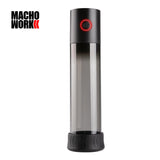
The OTOUCH MACHO WORK 1 automates the entire suction cycle. Stepless suction control lets you dial in exactly the pressure level that works for you — no fixed increments, no jumping between preset stages. The LED pressure indicator displays your current vacuum level in real time throughout the session. You don't need to interrupt anything to check where you are. A single-button quick-release valve drops pressure immediately if you need out.
The transparent acrylic cylinder lets you observe engorgement progress visually without stopping the session — genuinely useful when you're calibrating your therapeutic pressure across early sessions. Two silicone seal ring sizes ship in the box, covering different girth profiles without requiring a separate purchase. IPX7 waterproofing means you can incorporate the warm-water warm-up directly into your pre-session routine without disassembly.

OTOUCH pumps use a removable medical-grade silicone base seal. Removable means you actually clean it — not a cursory rinse of the cylinder exterior but a proper wash of the component that contacts your skin every session. That matters more for therapeutic users than for occasional use. If you're pumping four or five times a week as part of an ED management protocol, hygiene maintenance isn't optional.
The silicone also conforms better to body contours than rigid plastic alternatives. Better conformation means a more reliable airtight seal — which means you reach therapeutic pressure at lower pump effort and with less compensatory over-pumping. That chain of logic runs directly to session safety and consistency.
OTOUCH's accessory range extends the protocol at both ends of a session. The OTOUCH Sensual Warmer & Dispenser pre-heats water-based lubricant to body temperature before you apply it to the seal ring — a small but noticeable comfort improvement that also improves seal quality. Post-session, the OTOUCH Special Cleaning Rinser flushes the cylinder interior completely via a showerhead-attachment nozzle. Thorough cleaning takes 60 seconds instead of guesswork. Both accessories follow the same design logic as the pump: remove friction from every part of the routine, not just the active session.
Q: Can a vacuum penis pump actually treat erectile dysfunction?
Yes — and the evidence is solid. Vacuum erection devices are a clinically validated, FDA-cleared first-line treatment for erectile dysfunction. They work by mechanically drawing blood into the corpus cavernosum, producing a functional erection without any pharmacological intervention. Urologists have prescribed them for over 30 years. Success rates in clinical literature run between 68% and 83% for achieving erections sufficient for intercourse. They're not a fringe option — they're mainstream urology.
Q: How does a vacuum penis pump work for ED?
A vacuum pump creates negative air pressure inside a sealed cylinder placed over the penis. That pressure differential causes blood to flow into the erectile chambers regardless of whether the neurological or hormonal signals controlling natural erection are intact. It's a mechanical bypass. That's why VEDs work in cases where medications don't — the damaged pathway gets bypassed entirely rather than repaired.
Q: Is a penis pump safe for long-term ED management?
Yes, with proper technique. The clinical safety record spans over three decades. The requirements are straightforward: use a device with an integrated pressure gauge, stay below –5 inHg, limit continuous sessions to 15–20 minutes and respect rest days between sessions. Men on anticoagulants or with Peyronie's disease should discuss parameters with a urologist before starting — those conditions change the risk calculation.
Q: How often should I use a vacuum penis pump for ED?
Four to five sessions per week is adequate for most men managing ED. Daily sessions feature in some clinical rehabilitation protocols but they don't necessarily outperform consistent 4–5/week use for general ED management. The key variable is consistency over time — months of regular use, not session density in any given week. Track your sessions if you struggle with consistency. Habit formation matters more than intensity here.
Q: Does a penis pump work after prostate surgery?
It's one of the best-evidenced applications of VED therapy. Post-prostatectomy penile rehabilitation using VEDs is now standard practice at many major urology centres. A 2013 Journal of Sexual Medicine study found meaningful improvements in penile tissue health and erection recovery in men who started VED therapy within weeks of surgery. Starting early matters — the sooner you begin maintaining tissue oxygenation, the better the long-term outcomes.
Q: What pressure is safe for a vacuum penis pump?
Urologist consensus sets the hard ceiling at –5 inHg. Most men achieve therapeutic engorgement comfortably between –3 and –4 inHg. Above –5 inHg, petechiae (burst capillaries visible as red skin dots) become likely and more significant vascular injury is possible. A pump without a pressure gauge removes your only means of staying within this range. Don't buy one without it.
Q: Can I use a vacuum penis pump alongside ED medication?
Many men use VED therapy and PDE5 inhibitors together under medical supervision. Several studies show better outcomes from combination therapy than either approach alone — they target different mechanisms and don't compete. However, don't combine without discussing it with your doctor first, especially if you take nitrates, anticoagulants or cardiovascular medications. The drug interaction picture matters.
Q: Where can I find OTOUCH vacuum penis pumps?
The full OTOUCH range — including the MACHO WORK 1 electric vacuum pump and compatible accessories — is available at the OTOUCH all-products collection. All orders ship internationally in neutral unbranded packaging. No product name or brand appears on the outer label.
OTOUCH — Vacuum Penis Pumps for ED Support
MACHO WORK 1 Electric Pump · Sensual Warmer · Special Cleaning Rinser · Free International Shipping
Explore OTOUCH Penis Pumps
OTOUCH AIRTURN 2 — Precision Engineered. Deeply Satisfying. Some experience...
Shop
YU BattleHelm — All-in-One Pleasure Set with Fingertip Remote, Vibrating Extender & Wire...
Shop
SUBMARINE – IPX7 Waterproof Male Masturbator with Auto Thrusting, Vibration & 360° Contr...
Shop
OTOUCH AIRTURN 4 — Automatic Suction & Vibration Male Masturbator AIRTURN 4 is built aro...
Shop
CHIVEN 2 – Heating Oral Male Masturbator for Customizable Solo Pleasure Designed for men who...
Shop
INSCUP 4 is built for users who want more than basic vibration combining controlled suction...
Shop
OTOUCH INSCUP 2 — Discreet by Design. Intense by Nature. The INSCUP 2 makes a quiet promis...
Shop
OTOUCH MACHO WORK 2 — Targeted. Intense. Built for Performance. Most male toys go broad. T...
Shop
NINJA 2 – Inflatable Male Masturbator with Adjustable Tightness & 7 Vibration Modes The ...
Shop| 商品 | SKU | 説明 | コレクション | 在庫状況 | 商品タイプ | その他の詳細 |
|---|