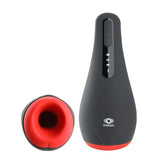
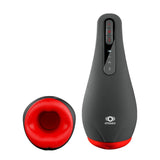
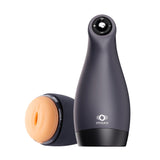
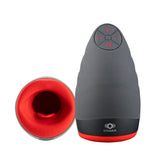
A dead battery mid-session is the fastest way to kill the mood. Most rechargeable sex toy battery life problems are avoidable. A few simple habits — charge to 80%, unp...
View More


When people hear the word "suction," they often think that stronger pressure automatically creates a better experience. For years, that assumption shaped the design of many suction-based devices. Manufacturers competed to increase suction power, believing that higher intensity was the key to better performance.
However, engineering tells a different story.
The real challenge isn't generating stronger suction it's controlling how that suction interacts with the user. That's the principle behind OTOUCH's Second-Generation Suction Technology.
Conventional suction systems rely entirely on vacuum pressure. As air is removed from the chamber, negative pressure creates a pulling force.
Although effective, this method has an inherent limitation. When vacuum pressure increases, the soft sleeve inside the device can expand instead of maintaining a consistent fit. As a result, pressure becomes less controlled and the overall experience may feel inconsistent.
Simply increasing suction cannot solve this problem.
OTOUCH redesigned the system by introducing an active airbag compression mechanism.
Instead of allowing the sleeve to react passively, the airbag contracts in synchronization with the suction system. As vacuum pressure increases, controlled inward compression helps maintain a closer and more stable fit.
This synchronized movement creates a dynamic pressure system rather than relying on a single source of force.
Second-Generation Suction Technology is designed around precision instead of intensity.
Rather than focusing on maximum suction, the system balances multiple elements simultaneously:
This coordinated approach produces a smoother and more refined interaction.
Technology evolves when engineers solve problems instead of simply increasing specifications.
Second-Generation Suction Technology is an example of that evolution. By combining intelligent pressure management with active compression, OTOUCH moves beyond traditional suction systems and introduces a smarter way to deliver performance.
The future of suction technology isn't measured by how powerful it becomes it's measured by how intelligently it responds.

OTOUCH AIRTURN 2 Male Masturbator — Precision Engineered. Deeply Satisfying.Introducing the ...
Shop
YU BattleHelm — All-in-One Pleasure Set with Fingertip Remote, Vibrating Extender & Wire...
Shop
Submarine: An Automatic Thrusting Masturbator Built for Water Most automatic male ma...
Shop
OTOUCH AIRTURN 4 — Automatic Suction & Vibration Male Masturbator AIRTURN 4 is built aro...
Shop
CHIVEN 2 – Heating Oral Male Masturbator for Customizable Solo PleasureDesigned for men who ...
Shop
Experience Unmatched Pleasure with the INSCUP 4 – Premium Male Masturbator with Suction Tech...
Shop
Macho Work 2 Glans Massager — Targeted. Intense. Built for Performance.Most male toys go bro...
Shop
NINJA 2 – Inflatable Male Masturbator with Adjustable Tightness & 7 Vibration ModesThe O...
Shop| Produkt | Artikelnummer | Beschreibung | Kollektion | Verfügbarkeit | Produkttyp | Weitere Details |
|---|