A dead battery mid-session is the fastest way to kill the mood. Most rechargeable sex toy battery life problems are avoidable. A few simple habits — charge to 80%, unp...
View More


A suction masturbator and a traditional stroker can both use a sleeve. They can look surprisingly similar in product photos. The underlying mechanism is different.
A traditional stroker mainly relies on manual movement and the properties of its sleeve. A suction masturbator adds a controlled air-pressure system around the sleeve. That difference affects how stimulation is generated, how much control the device has, how it should be cleaned, and what specifications actually matter.
This guide breaks down the difference from a technical and practical perspective. It also explains one important issue that product comparisons often miss: mode count is not the same thing as suction pressure.
A traditional stroker primarily creates stimulation through manual movement and sleeve contact. A suction masturbator adds controlled air-pressure changes inside a chamber surrounding the sleeve.
Some modern devices go further by combining suction with vibration or active clamping. At that point, you're no longer comparing two versions of the same simple sleeve. You're comparing different mechanical systems.
A traditional stroker is generally a sleeve-focused, manually operated device. A suction masturbator uses an enclosed chamber and controlled pressure changes to alter how the sleeve contacts the body. Some suction models also add vibration or clamping.
Neither mechanism can be described accurately as universally "better." The relevant difference is how stimulation is generated and how much of that process is controlled by the user versus the device.
A traditional stroker is generally a sleeve-style sex toy designed to be used around the penis. Planned Parenthood describes sleeves as soft tubes that go around the penis and notes that some sleeves can also include vibration or suction.
That definition is important because "stroker" does not necessarily mean completely non-electronic. The term mainly describes the sleeve-based format. When people say "traditional stroker," however, they usually mean a simpler design where the user's hand supplies the primary movement.
In a basic manual model, the sleeve itself does most of the work. Its internal shape, material, texture, elasticity, and fit influence the physical sensation.
The user controls the rhythm and movement directly rather than relying on a motorized system.
The internal sleeve is the primary interface and plays a major role in the overall experience.
A basic manual stroker does not need a pump, motor, battery, charging circuit, or electronic controls.
A suction masturbator adds an air-pressure mechanism to the sleeve-based format.
The device creates a controlled pressure difference inside a chamber. The flexible sleeve responds to that pressure change. The result is different from simply moving a sleeve back and forth with your hand.
Planned Parenthood separately identifies pumps as devices that use a hand- or battery-powered pump to create suction. A suction masturbator is not the same thing as a medical vacuum erection device. Consumer sexual-wellness products can use suction as part of the sensation without being medical devices.
That's an important distinction. You should not interpret a pleasure-oriented suction masturbator as an erectile-dysfunction treatment unless the product is specifically indicated and regulated for that medical purpose.
"Suction" describes a mechanism, not a medical indication. A pleasure device that uses air pressure should not automatically be described as a medical vacuum pump.
The word "suction" can make the mechanism sound mysterious. The physics is actually straightforward.
In engineering and physics, pressure is force per unit area. OpenStax defines pressure as P = F/A. That means a pressure difference acting over an area produces a corresponding force.
Where:
P = pressure
F = force
A = area over which the force acts
For a suction system, the useful concept is a pressure difference between the inside of the chamber and the surrounding air.
A larger pressure difference can produce a greater force on the surfaces exposed to that difference. Real suction masturbators are more complicated than this simple equation because the sleeve is flexible, the chamber is not a rigid laboratory vessel, and the pressure changes dynamically.
This is why it is misleading to describe every suction masturbator only as "strong" or "weak." Pressure is one variable. The area of contact, sleeve elasticity, sealing behavior, pressure pattern, and mechanical design also affect the resulting force and sensation.
| Technical Factor | Traditional Stroker | Suction Masturbator |
|---|---|---|
| Primary mechanism | Manual movement + sleeve contact | Controlled air pressure + sleeve contact |
| Main source of movement | User's hand | Pressure system, with manual movement depending on the design |
| Pressure control | Mainly determined by hand pressure, sleeve elasticity, and fit | Controlled by the air-pressure system and its programmed modes |
| Vibration | Not inherent | Optional and common on powered models |
| Battery | Not required for a basic manual model | Usually required for powered suction systems |
| Noise | Minimal for a non-motorized design | Depends on pump, motor, vibration system, and enclosure |
| Maintenance | Mainly sleeve cleaning and drying | Sleeve care plus electronic-body and charging requirements |
With a traditional stroker, your hand determines the movement pattern. You can change speed and direction instantly without navigating a control interface.
A suction masturbator moves part of that control into the device. The air system controls how chamber pressure changes. Depending on the product, you may then combine that pressure system with manual movement, vibration, or clamping.
This creates a fundamentally different control model.
The user is the main controller. Changes in pace and movement happen directly through the hand.
The device introduces a programmable pressure system. The user chooses settings and the mechanism produces the pressure pattern.
Some products combine device-generated pressure or vibration with continued manual control.
Some products add active clamping so the sleeve can be compressed in addition to being exposed to suction.
This is where many online product comparisons become technically weak.
A proper engineering comparison would ideally provide a measurable pressure specification in units such as pascals, kilopascals, or another standardized pressure unit. OTOUCH's current AIRTURN 3 and AIRTURN 4 product pages publish suction-mode counts, battery data, noise specifications, and other product details. They do not publish a standardized suction-pressure figure such as maximum kPa on those pages.
That means it would be inaccurate to say that seven suction modes are "stronger" than four suction modes purely because 7 is a larger number.
Suction mode count ≠ suction pressure. Mode count tells you how many programmed options are available. It does not provide a direct measurement of maximum vacuum or pressure differential.
Current OTOUCH specifications make this distinction easy to see.
| Specification | AIRTURN 3 | AIRTURN 4 | What It Actually Tells You |
|---|---|---|---|
| Suction modes | 4 | 7 | AIRTURN 4 offers more programmed suction options. This is not a direct pressure measurement. |
| Vibration | 3 modes × 3 intensities | 7 modes | Both add vibration, but the control structures differ. |
| Active clamping | Not listed | Yes | AIRTURN 4 adds a separate mechanism that changes sleeve pressure through active clamping. |
| Battery | 720mAh | 1000mAh | Battery capacity differs. Capacity alone does not determine actual runtime. |
| Stated runtime | More than 60 minutes | More than 50 minutes | Published runtime depends on the manufacturer's test conditions and operating mode. |
| Working noise | Below 60dB | Below 65dB | These are manufacturer specifications. Actual perceived sound depends on environment and surface. |
| Inner sleeve | Removable TPE | Removable inner sleeve | Removability can simplify cleaning and drying. |
The current AIRTURN 4 page also describes the product as using second-generation suction technology that combines suction with automatic active clamping. OTOUCH says the airbag compression structure contracts as suction is applied. That is a design difference, not a published medical or laboratory measurement of "realism." :contentReference[oaicite:2]{index=2}

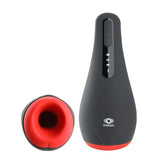
The current product page lists four suction modes, three vibration modes with three intensity levels each, a removable TPE inner sleeve, a 720mAh battery, more than 60 minutes of stated runtime, and working noise below 60dB.
View AIRTURN 3
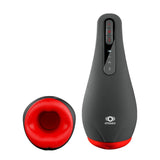
AIRTURN 4 adds automatic active clamping to its suction architecture. OTOUCH lists seven suction modes, seven vibration modes, an OLED display, a 1000mAh battery, more than 50 minutes of stated usage, and working noise below 65dB.
The current product instructions state that the main body is not waterproof and that the inner sleeve should be removed before rinsing.
View AIRTURN 4A manual stroker gives you direct, continuous control. You don't need to select modes or wait for a motor to respond.
A suction masturbator introduces device-based control. You can choose a programmed suction pattern, intensity, or combination depending on the model.
A traditional stroker relies heavily on sleeve material, texture, fit, movement, and friction.
A suction masturbator adds a pressure component. If it also includes vibration or clamping, several mechanisms may operate at the same time.
A manual stroker can change instantly because your hand controls it. That's useful when you want continuous adjustment.
A powered device can repeat a programmed pattern more consistently. That consistency is one of the practical reasons electronic designs exist.
A basic stroker has fewer components. An electronic suction model can have a sleeve, pump, motor, battery, charging circuit, seals, controls, and housing.
More components don't automatically mean more difficult maintenance. What matters is whether the manufacturer has designed the device for practical access to the parts that need cleaning.
A non-motorized stroker doesn't generate motor or pump noise.
A suction masturbator can produce mechanical noise from the pump, motor, or vibration system. Current OTOUCH specifications list AIRTURN 3 below 60dB and AIRTURN 4 below 65dB.
Don't treat a published dB figure as a promise about how loud the device will sound in your bedroom. Room acoustics, furniture, vibration transfer, and distance all affect perceived noise.
This is where technical writing needs to separate manufacturer claims from measurable evidence.
OTOUCH describes AIRTURN 4's second-generation suction technology as producing a more enveloping and responsive pressure pattern by combining suction with active compression. That is a description of the manufacturer's design objective.
It is not the same thing as an independently measured clinical or laboratory finding that the product reproduces a particular biological sensation.
A useful buyer should therefore translate "realistic" into engineering terms: sleeve material, chamber design, pressure control, clamping behavior, vibration, dimensions, noise, and maintenance.
Replace "How realistic is it?" with "What physical mechanism is the manufacturer using to create that claim?"
The sleeve is important in both a traditional stroker and a suction masturbator. The difference is that a suction device also depends on the relationship between the sleeve and the surrounding pressure chamber.
A sleeve that is too loose, damaged, distorted, or improperly installed may not behave as intended. In a suction system, changes in the seal can also affect how the chamber pressure changes.
Sleeve fit mainly affects grip, friction, pressure, texture, and movement.
Sleeve fit can affect both physical contact and the behavior of the pressure chamber.
Active or manual clamping changes how tightly the sleeve contacts the body independently of simple hand movement.
Material claims deserve careful wording.
ISO 3533:2021 is an international standard specifically covering safety and user-information requirements relating to the materials and design of manufactured sexual products intended for direct contact with the genitals and/or anus. ISO lists the standard as published in September 2021 and currently under systematic review.
The existence of ISO 3533 does not mean every sex toy on the market complies with it. A brand must substantiate any product-specific compliance or certification claim separately.
For buyers, the practical lesson is straightforward: don't rely only on phrases such as "skin-safe" or "body-safe." Look for the actual material information and the manufacturer's care instructions.
Lubrication affects friction, comfort, cleaning, and material compatibility.
Planned Parenthood states that water-based lubricant is a safe option for sex toys and warns that silicone lubricant can react with solid silicone toys. The same source recommends following the manufacturer's instructions for cleaning and care.
OTOUCH currently recommends water-based lubricants for its products. Its Help Center also advises avoiding silicone-based lubricant on silicone products unless the manufacturer specifically confirms compatibility.
| Lubricant Type | Why It Matters | Practical Approach |
|---|---|---|
| Water-based | Broad compatibility and relatively easy cleanup | OTOUCH's current default recommendation |
| Silicone-based | Can interact with some silicone materials | Use only when the manufacturer confirms compatibility |
| Oil-based | May be incompatible with certain toy materials | Don't use unless the product manufacturer specifically says it is compatible |
Cleaning is often where the technical difference becomes very practical.
A simple sleeve has fewer mechanical components. A powered suction device may require separate care for the sleeve and the electronic housing.
OTOUCH's current Help Center recommends cleaning products before and after use with warm water and mild, fragrance-free soap or a dedicated toy cleaner. It also recommends thorough rinsing and drying. The exact product manual takes priority.
| Care Question | Traditional Stroker | Suction Masturbator |
|---|---|---|
| Sleeve cleaning | Core maintenance task | Core maintenance task |
| Drying | Important for internal sleeves | Especially important because powered components may be nearby |
| Electronic body | Usually not applicable to a basic manual product | Requires product-specific water protection instructions |
| Charging | Not required for a basic manual product | Usually required |
Waterproofing is another area where product comparisons often become vague.
IEC 60529 is the international standard used for the IP Code classification of protection provided by electrical enclosures. The important point for consumers is that an IP rating is a defined enclosure-protection classification. It is not a generic synonym for "safe around water."
This matters with rechargeable masturbators. A removable washable sleeve doesn't automatically make the electronic housing waterproof.
AIRTURN 4's current product information explicitly states that the main body is not waterproof and instructs users to remove the inner sleeve before rinsing. Do not infer full-device waterproofing from the fact that one component is washable.
A serious comparison should separate hard specifications from subjective marketing.
| Specification | Useful? | Why |
|---|---|---|
| Suction mode count | Yes, with limitations | Tells you how many programmed options are available. It does not directly measure suction force. |
| Suction pressure in kPa or similar | Very useful | Gives a quantitative pressure value when measured under defined conditions. |
| Battery capacity | Useful | Allows basic capacity comparison but doesn't by itself determine runtime. |
| Published runtime | Useful | More directly relevant to normal use than capacity alone. |
| Noise specification | Useful | Provides a measurable reference, although actual perceived noise varies by environment. |
| Sleeve material | Very useful | Affects cleaning, lubrication compatibility, durability, and physical feel. |
| Waterproof rating | Very useful | Determines how the powered housing should be exposed to water under the manufacturer's instructions. |
AIRTURN 3 currently lists four suction modes, three vibration modes with three intensity levels each, a 720mAh battery, more than 60 minutes of stated runtime, a removable TPE sleeve, and working noise below 60dB.
AIRTURN 4 currently lists seven suction modes, seven vibration modes, automatic active clamping, an OLED display, a 1000mAh battery, more than 50 minutes of stated runtime, a removable inner sleeve, and working noise below 65dB.
What those pages do not provide is a standardized numerical suction-pressure value that would allow a reader to calculate or directly compare the maximum vacuum between the two models.
That's why a technically honest article should compare their mechanisms and published specifications rather than inventing a "stronger by X%" claim.
AIRTURN 3 provides four suction modes and a separate vibration system with three modes and three intensity levels. Its removable TPE sleeve and published sub-60dB noise specification make it a useful example of a suction masturbator that adds electronic pressure control without relying on automatic thrusting.
View AIRTURN 3
AIRTURN 4 adds a second pressure mechanism. OTOUCH describes its system as combining suction with automatic active clamping. The current specifications list seven suction modes, seven vibration modes, an OLED display, a 1000mAh battery, and a removable inner sleeve.
View AIRTURN 4The answer depends on what you mean by control.
A traditional stroker gives you direct physical control over pace, movement, and pressure. There is no interface between your hand and the sleeve.
A suction masturbator gives you control over the programmed pressure pattern. That control comes through buttons, switches, or other controls rather than directly through hand movement.
Some devices combine both approaches. You can manually control movement while the device generates suction or vibration.
A basic manual sleeve has fewer systems to understand, charge, and maintain.
You can change pace and movement instantly without selecting a mode.
A manual product avoids batteries, charging circuits, pumps, and motor noise.
Simpler devices can be easier to store and transport.
Suction adds a pressure mechanism that a basic manual sleeve does not have.
Different suction modes can produce different programmed pressure patterns.
Some devices combine suction with vibration or active clamping.
Electronic controls can reproduce a selected program without requiring your hand to maintain the exact same movement.
Decide whether you actually want suction. Don't pay for a pump when the mechanism itself isn't useful to you.
Verify material, fit, removability, and lubricant compatibility.
Look at battery, runtime, noise, charging, suction controls, and vibration.
Confirm what can be rinsed, what must stay dry, and how the sleeve should be cleaned and dried.
A traditional stroker primarily relies on manual movement and sleeve contact. A suction masturbator adds a controlled air-pressure system around the sleeve.
No. Vibration and suction are different mechanisms. Vibration uses a motor to create mechanical oscillation. Suction changes pressure inside a chamber. Some products include both.
No. Suction and automatic thrusting are different functions. A product can use suction without mechanically moving the sleeve back and forth.
A basic non-motorized stroker does not produce motor or pump noise. Powered products vary by design. OTOUCH currently lists AIRTURN 3 below 60dB and AIRTURN 4 below 65dB.
No. Mode count describes the number of programmed options. It does not provide a direct measurement of pressure or vacuum level.
Consumer product pages often describe suction through modes rather than publishing a standardized pressure measurement. Without a defined measurement method and a pressure figure, mode count alone cannot be used as a quantitative comparison of suction force.
No. Sleeve material, elasticity, chamber geometry, sealing, contact area, pressure pattern, lubrication, and clamping can also affect the result.
A suction system depends on controlled pressure inside the chamber. If air enters or escapes differently from the intended design, the pressure behavior can change.
The current AIRTURN 3 product specifications list suction and vibration functions. They do not list automatic thrusting as one of its stated functions.
Yes. OTOUCH describes AIRTURN 4 as combining second-generation suction with automatic active clamping.
A simple manual stroker has fewer components. However, a suction masturbator with a removable sleeve can also be practical to maintain. The key question is whether the powered body must remain dry and whether the sleeve can be removed completely.
Only according to the product's water-resistance instructions. AIRTURN 4's current product information states that the main body is not waterproof and instructs users to remove the inner sleeve before rinsing.
OTOUCH currently recommends water-based lubricant for its products. Planned Parenthood also identifies water-based lubricant as a safe option for sex toys and advises checking material compatibility.
Planned Parenthood advises against using silicone lubricant with solid silicone sex toys unless a barrier such as a condom is used. Always follow the manufacturer's compatibility instructions for the specific product.
Not automatically. Pleasure-oriented suction masturbators are consumer sexual-wellness products. Medical vacuum erection devices are a separate category with different intended uses and regulatory considerations.
No. ISO 3533:2021 is an international standard covering material, design, safety, and user-information requirements for applicable sexual products. A specific product's compliance or certification must be separately substantiated.
They use different mechanisms. A traditional stroker emphasizes direct manual movement and sleeve characteristics. A suction masturbator adds controlled air pressure and may add vibration or clamping.
Start with the mechanism you actually want. Choose a manual stroker when simplicity and direct control are the priority. Choose a suction model when pressure-based stimulation is the feature you're specifically looking for.
OTOUCH recommends cleaning before and after use with warm water and mild, fragrance-free soap or a dedicated toy cleaner, followed by thorough rinsing and drying. Always follow the specific product manual for powered components.
Compare the mechanism, sleeve material, suction controls, vibration, clamping, battery, runtime, noise, waterproofing, cleaning method, lubricant compatibility, dimensions, and return policy.
| Category | Traditional Stroker | Suction Masturbator | What to Verify |
|---|---|---|---|
| Mechanical principle | Manual sleeve movement | Controlled pressure plus sleeve | Actual device mechanism |
| Suction | Not inherent | Core feature | Pressure system and mode behavior |
| Vibration | Optional | Common on powered models | Modes and intensity |
| Active clamping | Usually absent | Available on some designs | Manual or automatic operation |
| Quantitative suction pressure | Not applicable | Not always published | Look for actual kPa, Pa, or equivalent measurement |
| Cleaning | Sleeve-focused | Sleeve + powered-body considerations | Product-specific instructions |
| Water protection | Material dependent | Housing-dependent | Exact IP rating and manufacturer instructions |
| Charging | Not required for basic models | Usually required | Battery capacity, charging time, runtime |
Look for suction, pump, air chamber, vibration, clamping, or thrusting. Don't rely on the product name alone.
Check battery, runtime, dimensions, weight, noise, mode count, and any published pressure specification.
Check waterproofing, lubricant compatibility, cleaning restrictions, charging requirements, and sleeve care.
Treat words like "powerful," "realistic," and "natural" as marketing descriptions unless independent measurements support them.
The difference between a suction masturbator and a traditional stroker is fundamentally a difference in mechanism.
A traditional stroker relies mainly on the user's movement and the properties of its sleeve. A suction masturbator adds controlled air-pressure changes inside a chamber. Modern products may then combine suction with vibration, active clamping, or other electronic functions.
The physics is not mysterious. Pressure is force per unit area. A controlled pressure difference across a flexible sleeve can change how that sleeve contacts the body. The exact result depends on the complete system rather than suction alone.
This also explains why mode count should not be treated as a direct measure of suction strength. A product with seven suction modes has more programmed options than one with four. Without a standardized pressure measurement, you cannot honestly conclude that it generates a particular percentage more suction.
For buyers, the most useful comparison is therefore straightforward: mechanism first, sleeve second, controls third, maintenance fourth, and marketing claims last.
Follow the manufacturer's instructions for lubrication, cleaning, charging, pressure settings, and water exposure. Start with a lower setting when using an unfamiliar device. Stop using the product if you experience pain, numbness, significant irritation, or another concerning symptom. Seek medical advice if symptoms persist.

OTOUCH AIRTURN 2 Male Masturbator — Precision Engineered. Deeply Satisfying.Introducing the ...
Shop
YU BattleHelm — All-in-One Pleasure Set with Fingertip Remote, Vibrating Extender & Wire...
Shop
Submarine: An Automatic Thrusting Masturbator Built for Water Most automatic male ma...
Shop
OTOUCH AIRTURN 4 — Automatic Suction & Vibration Male Masturbator AIRTURN 4 is built aro...
Shop
CHIVEN 2 – Heating Oral Male Masturbator for Customizable Solo PleasureDesigned for men who ...
Shop
Experience Unmatched Pleasure with the INSCUP 4 – Premium Male Masturbator with Suction Tech...
Shop
Macho Work 2 Glans Massager — Targeted. Intense. Built for Performance.Most male toys go bro...
Shop
NINJA 2 – Inflatable Male Masturbator with Adjustable Tightness & 7 Vibration ModesThe O...
Shop| Product | SKU | Description | Collection | Availability | Product type | Other details |
|---|