Ah, men. Complex creatures indeed.
I am one, and I work exclusively with them. I lead men’s groups, share deep male friendships, and work professionally with guys navi...
View More


Most suction-based male masturbators work on the same basic principle: seal a chamber, remove air, create negative pressure. It's a simple idea, and for years, nobody questioned it. Then engineers actually looked at what that simple idea does to the inner sleeve during use — and found a structural problem that had been sitting there the whole time.
Spec Snapshot — AIRTURN 4
Here's what traditional negative-pressure suction actually does: it pulls the sleeve inward evenly across the whole chamber. That sounds fine in theory. In practice, it tends to create uneven expansion, particularly near the base of the cavity, which reduces consistent contact around the most sensitive areas. Strong suction and consistent contact turned out to be two different engineering problems — and first-generation designs only ever solved one of them.
OLD WAY
A sealed chamber, air removed, uniform negative pressure pulls the entire sleeve inward at once.
THE PROBLEM
Uniform pressure doesn't mean uniform contact. Expansion near the base is often uneven, which weakens sensation exactly where it matters most.
NEW WAY
A second, independent airbag layer works alongside suction. When suction activates, the airbag contracts in coordination, applying controlled, targeted pressure rather than relying on suction alone to shape the sleeve.
RESULT
More stable, consistent contact across the full length of the sleeve, plus better structural integrity during extended use.
Simplified illustration of the dual-layer suction + airbag compression system
The system works in two coordinated layers rather than one. The outer chamber still generates negative pressure the way traditional suction always has. But a second, independent airbag layer sits inside that chamber, and it contracts in sync with the suction cycle rather than being driven passively by it. That's the core shift: pressure that's engineered and directed, instead of pressure that's just... happening.
This is the same underlying technology behind the INSCUP 4's automatic clamping system, adapted for AIRTURN's suction-and-vibration format. Both product lines solve the same base problem — inconsistent sleeve contact — using the same underlying compression principle, tuned differently for each device's mechanics.
It's tempting to market any suction upgrade as simply "more powerful." That's not really what changed here. Suction strength alone was never the limiting factor — consistency was. A device can generate strong suction and still deliver an inconsistent experience if the sleeve doesn't maintain even contact. Second-generation suction technology targets that consistency problem directly, rather than just turning up the intensity dial.
In practice, that shows up as: more stable sensation throughout a session, less "drift" in contact as the sleeve shifts, and a sleeve structure that holds its shape better over repeated use — which also has a secondary benefit for material longevity.

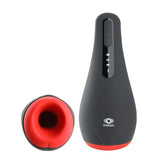
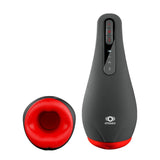
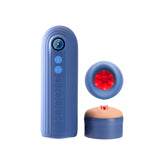
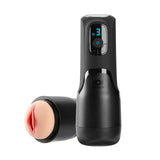
AIRTURN 4
7 independently adjustable suction levels, 7 vibration patterns, and dual heating, built around OTOUCH's second-generation suction engineering.
View AIRTURN 4 →No. The core improvement is consistency of contact through a coordinated airbag compression layer, not raw suction power. Strength and consistency are separate engineering problems, and this technology specifically targets the latter.
It appears across the AIRTURN and INSCUP lines, adapted to each device's specific mechanics — suction-and-vibration format for AIRTURN, and automatic clamping for INSCUP.
The added internal structure means it's worth being thorough about drying after cleaning, since there's more internal surface area involved than a single-chamber design. See our cleaning and maintenance guide for material-specific steps.
Not inherently. The coordinated compression design actually helps the sleeve hold its shape better over repeated use compared to relying on suction pressure alone, which can support longevity rather than reduce it.
How materials affect this technology · Browse the full collection
Technical details reflect OTOUCH's publicly announced second-generation suction technology and manufacturer specifications current as of 2026.

OTOUCH AIRTURN 2 — Precision Engineered. Deeply Satisfying. Some experience...
Shop
YU BattleHelm — All-in-One Pleasure Set with Fingertip Remote, Vibrating Extender & Wire...
Shop
TOUCH SUBMARINE – IPX7 Waterproof Male Masturbator with Auto Thrusting, Vibration, 360° Cont...
Shop
OTOUCH AIRTURN 4 — Automatic Suction & Vibration Male Masturbator AIRTURN 4 is built aro...
Shop
CHIVEN 2 – Heating Oral Male Masturbator for Customizable Solo Pleasure Designed for men who...
Shop
INSCUP 4 is built for users who want more than basic vibration combining controlled suction...
Shop
OTOUCH INSCUP 2 — Discreet by Design. Intense by Nature. The INSCUP 2 makes a quiet promis...
Shop
OTOUCH MACHO WORK 2 — Targeted. Intense. Built for Performance. Most male toys go broad. T...
Shop
NINJA 2 – Inflatable Male Masturbator with Adjustable Tightness & 7 Vibration Modes The ...
Shop| 상품 | SKU | 설명 | 컬렉션 | 재고 여부 | 상품 유형 | 기타 정보 |
|---|