A dead battery mid-session is the fastest way to kill the mood. Most rechargeable sex toy battery life problems are avoidable. A few simple habits — charge to 80%, unp...
View More


You bought a premium toy. The last thing you want is a $4 bottle of lube turning a $139 device into a sticky, degraded mess. Here's how to pick the right formula.
Here's a story that probably sounds familiar: a buddy buys his first high-end masturbator. Grabs whatever lube is on the bathroom shelf — maybe some silicone-based stuff that feels amazing. Fast forward three months and the toy's interior feels wrong. Swollen. Sticky. The texture he paid for? Gone. He throws it away, blames the brand, and never realizes the lube did it.
Choosing the best lubricant for your masturbator isn't about brand loyalty or what feels slickest on your hand. It's about chemistry. What your toy is made of dictates what you can put on it. Get it wrong and you're slowly destroying your investment. Get it right and your toy lasts years, not months.
Before we talk lube, you need to know your materials. Every OTOUCH toy uses one or more of three materials:
The takeaway? If your toy has silicone or TPE anywhere near the action — and they all do — your lube choice matters. A lot.
If you only ever remember one rule, make it this: water-based lubricant is safe with every material in every OTOUCH toy. Silicone, TPE, ABS — it doesn't matter. Water-based lube won't degrade any of them. Period.
Here's what water-based lube brings to the table:
The only real downside: water-based lube dries out faster than silicone-based. You'll need to reapply during longer sessions. Keep the bottle handy. A quick reapply takes five seconds and saves you from friction that damages both skin and toy.
For the best lubricant for masturbator users who want zero guesswork, water-based is your answer. It's not the sexiest choice. It's the smart one.
Now the one you need to hear. Never use silicone-based lubricant on a silicone toy. This isn't marketing hype or a cautious suggestion — it's chemistry.
Here's what happens at the molecular level: silicone lubricant contains polydimethylsiloxane (PDMS) or similar silicone polymers. When those polymers contact the silicone elastomer in your toy, they bond. The liquid silicone acts as a solvent on the solid silicone surface. The result? Swelling. Softening. Stickiness. Loss of surface definition.
For AIRTURN 1 and 2 owners with full silicone sleeves, that means the internal textures start to lose their precision. For AIRTURN 4 and INSCUP 4 owners with removable TPE sleeves, it's even worse — TPE is more porous than silicone, so it absorbs the silicone lube faster and degrades more visibly. What starts as "feels a little different" becomes "feels like a sticky balloon" in as little as four to six weeks of regular use.
If you've been using silicone lube on your silicone toy and it still feels fine — good. But cumulative damage is sneaky. Every application leaves a microscopic layer of bonded silicone on the surface. The degradation is invisible until it suddenly isn't. By the time you notice texture changes, the damage is baked in. No cleaning protocol reverses it.
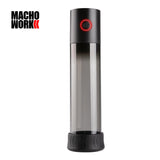
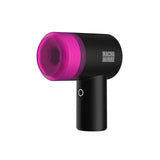
The only OTOUCH components where silicone lube is truly safe? The ABS plastic bodies in the MACHO WORK 1 and MACHO WORK 2. ABS doesn't react with silicone polymers. But since those surfaces rarely contact your skin during normal use, this is more of a technical footnote than a practical recommendation.
Hybrid lube mixes a water-based base with a small percentage of silicone — usually 5–15%. You get the easy cleanup and material safety of water-based with a touch of the extra glide and longevity that silicone provides.
Is it silicone safe lube? For medical-grade silicone toys, the answer is: mostly. The silicone concentration in hybrid formulas is low enough that significant degradation is unlikely with normal use. You probably won't see the kind of rapid damage that pure silicone lube causes. But "probably won't" and "definitely won't" are different things.
The risk level depends on the specific toy:
Bottom line on hybrid: it's a reasonable compromise if you want extra glide and don't want to reapply as often. But if you're using a toy with TPE sleeves — which absorb chemicals faster — water-based remains the safest call.
Not all water-based lubes are created equal. Here's your shopping checklist:
Here's a rule that prevents most friction-related toy damage: if you feel resistance, you need more lube. Not "maybe." Not "let's see if it gets better." You need more lube right now.
Most users need 3–5ml per session with water-based lube. Apply to the toy's internal chamber before first contact. Apply to yourself. Add more at the first hint of friction. There's no shame in reapplying halfway through — it's literally what the bottle is for.
A few practical notes:
Even water-based lube leaves a film if you don't clean properly. The routine is simple:
This applies to every toy in the lineup. Whether you're cleaning a compact CHIVEN 68 or a full-size AIRTURN 4, the rinse-clean-dry-store cycle protects both your health and your investment.
If you take nothing else from this article, take this: water-based lubricant works with every OTOUCH toy, every material, every mode, every time. It's safe. It's effective. It's easy to clean. It won't degrade your toy. Everything else is a calculated risk — and the math doesn't favor silicone-based lube on silicone or TPE surfaces.
Pick up a quality water-based lube. Use generously. Reapply often. Your toy will thank you by lasting years longer than the guy who grabbed whatever was on the shelf.
Keep your lineup in top shape:
Browse the OTOUCH Accessories Collection
Cleaning rinser · Chamber dryer · Suction cup holder · Heating rod — everything your toys need for long-term care.
Water-based lubricant is the best all-purpose choice. It's safe for every material OTOUCH uses — medical-grade silicone, TPE, and ABS. It provides smooth glide, cleans up easily, and won't degrade your toy's surface or textures over time. If you want the best lubricant for your masturbator without thinking twice, water-based is it.
No. Silicone lubricant bonds with the silicone elastomer in your toy, causing swelling, surface softening, and permanent texture damage. Every OTOUCH toy — AIRTURN, INSCUP, CHIVEN, SUBMARINE, Pleasure Engine — uses medical-grade silicone or TPE. Avoid silicone-based lube entirely with these toys.
Hybrid lube (water-based with a small silicone percentage) is generally safe for medical-grade silicone and TPE toys. It offers extra glide with minimal risk. But if your toy uses a TPE sleeve — AIRTURN 3, AIRTURN 4, INSCUP 4, MACHO WORK 2 — pure water-based remains the safest option since TPE absorbs chemicals faster than silicone.
Skip silicone-based lube completely with TPE sleeves. The material's porosity absorbs silicone polymers faster than silicone elastomer does, accelerating degradation. Also avoid baby oil, petroleum jelly, hand lotion, and alcohol-based products — all of which damage TPE surfaces or leave residues that attract bacteria.
Apply generously to the toy's internal chamber and your body before use. Most users need 3–5ml per session with water-based lube. Reapply whenever you feel friction — don't wait. With high-suction toys like the AIRTURN 4 or thrusting toys like the SUBMARINE, adequate lube improves both comfort and sensation.
The only components where silicone lube is truly safe are the ABS plastic bodies in the MACHO WORK 1 and MACHO WORK 2. ABS doesn't chemically bond with silicone polymers. But since functional surfaces on all OTOUCH toys use silicone or TPE, stick with water-based lube for every contact point. The one exception that doesn't matter doesn't justify the risk everywhere else.

AIRTURN 2 / At a glanceSuction, vibration and warmth. Your choice. AIRTURN 2 combines suct...
Shop
YU BattleHelm — All-in-One Pleasure Set with Fingertip Remote, Vibrating Extender & Wire...
Shop
Submarine: An Automatic Thrusting Masturbator Built for Water Most automatic male ma...
Shop
AIRTURN 4 / At a glanceSeven suction modes. Seven ways to add vibration. AIRTURN 4 combine...
Shop
CHIVEN 2 – Heating Oral Male Masturbator for Customizable Solo PleasureDesigned for men who ...
Shop
INSCUP 4 / At a glanceAutomatic rhythm. Manual adjustment. Private storage. INSCUP 4 combi...
Shop
Macho Work 2 Glans Massager — Targeted. Intense. Built for Performance.Most male toys go bro...
Shop
NINJA 2 – Inflatable Male Masturbator with Adjustable Tightness & 7 Vibration ModesThe O...
Shop| Prodotto | SKU | Descrizione | Collezione | Disponibilità | Tipo di prodotto | Altri dettagli |
|---|